How Drought Stress and Recent Heavy Rainfall Can Impact Tree Stability This Summer
Summer in Texas brings more than just heat; recent heavy rains have also created challenges for trees across the region. While rain is generally beneficial, the combination of previous dry conditions and sudden soil saturation can affect tree stability in ways that are not always immediately visible.
A tree’s overall health before and during heavy rainfall plays a significant role in how well it handles saturated soils and any accompanying wind. Trees that entered the rainy period already stressed from drought or other factors are more likely to develop issues such as root instability, leaning, or branch failure.
Why Tree Health Matters More Than You Think After Heavy Rains
Many trees in Texas experienced drought stress earlier in the season. When heavy rains arrive, the sudden saturation of soil around already-weakened root systems can reduce stability. Roots that were limited by dry conditions may not anchor as firmly once the soil becomes soft and waterlogged.
Unlike lawns, trees often reveal stress gradually. Signs that were present before the rains can become more problematic afterward, especially if the soil remains wet for extended periods.
Common Signs of Drought Stress (Relevant After Heavy Rains)
- Wilting, curling, or drooping leaves
- Browning leaf edges
- Premature leaf drop
- Sparse or thinning canopy
- Dead twigs and branches throughout the tree
- Slow growth or reduced vigor
- Increased insect or disease pressure
These symptoms can indicate a tree that was already compromised. When followed by heavy rainfall and saturated soil, the risk of structural issues increases because weakened roots have less ability to hold the tree upright in soft ground.

How Drought Stress Increases Risks from Heavy Rains
Drought-stressed trees often have reduced root mass and lower energy reserves. When heavy rain saturates the soil:
- Soil around the roots loses its firmness, making it easier for trees to lean or shift.
- Brittle branches from prior stress are more likely to break under added weight or wind.
- Moisture fluctuations (wet soil followed by drying) can worsen existing cracks or decay.
- Root systems that were already shallow or limited have greater difficulty regaining stability.
Even without strong winds, saturated soil combined with a compromised root system can lead to failure. A period of heavy rain can therefore expose problems that developed during drier months.
Managing Proper Watering After Heavy Rains
One of the most common questions after heavy rainfall is whether additional watering is needed. In many cases, the answer is to wait.
Heavy rains can leave soil saturated for days or even weeks, depending on soil type and drainage. Adding more water during this time can deprive roots of oxygen and raise the risk of root rot and fungal problems. Clay-heavy soils common in parts of Texas drain especially slowly.

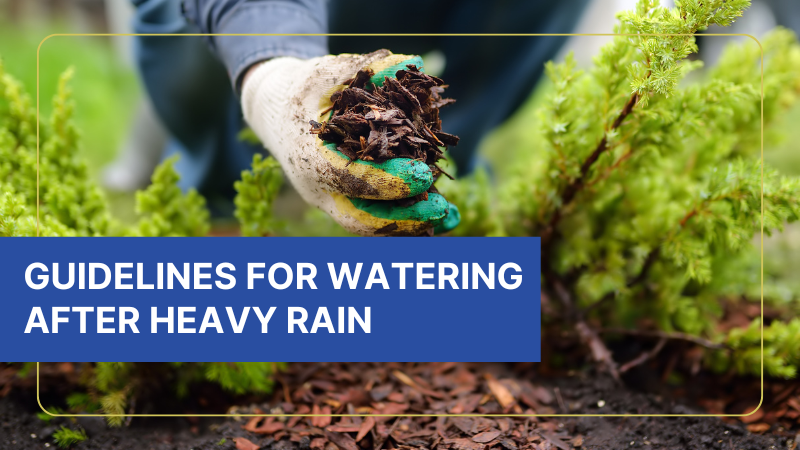
Practical Guidelines for Watering After Heavy Rain
- Check soil moisture before watering. Insert a finger, screwdriver, or soil moisture meter about 2–4 inches deep. If the soil still feels moist, wait.
- Allow the top several inches of soil to dry out between watering cycles. This is especially important after prolonged or repeated heavy rain.
- Newly planted trees need more consistent moisture than established trees, but even they should not be watered if the soil is already saturated.
- During hot, dry periods between rain events, resume deep watering to encourage roots to grow downward. Water slowly and thoroughly rather than lightly and often.
- Mulch helps moderate soil moisture. A 2–4 inch layer around the root zone (kept several inches away from the trunk) reduces rapid drying and protects roots from extreme swings between wet and dry conditions.
- Avoid watering if rain is forecast within the next several days.
The goal is to maintain relatively consistent soil moisture without extremes. Both prolonged drought and prolonged saturation can stress trees; managing the transition between the two is key to long-term stability.

Post-Heavy Rain Tree Inspection Checklist
After periods of heavy rain, it is useful to walk your property and note any changes in your trees.
Look for:
- New or increased leaning, or soil mounding or cracking around the base of the trunk (signs of root movement)
- Exposed roots or erosion around the root collar
- Dead, hanging, or broken branches
- Limbs that now extend over structures
- Cracks or splits in the trunk or major limbs that appear to have worsened
- Signs of decay, fungal growth, or oozing sap (wet conditions can accelerate these issues)
- Trees that were already showing stress before the rains and now appear more unstable
Noting these observations early allows you to prioritize which trees may need closer attention.
Protecting Trees After Recent Heavy Rains
Heavy rainfall events can reveal or accelerate underlying tree issues, particularly in trees that were already stressed. Regular observation combined with appropriate watering practices helps reduce the chance of unexpected failure.
If you notice significant leaning, widespread branch dieback, or other concerning changes after the recent rains, consulting a certified arborist can provide a clearer picture of the tree’s condition and stability. Professional assessments are especially helpful when safety or property risk is involved.
For questions about tree care or to schedule an evaluation, contact Republic Tree Service at (210) 480-TREE.
Healthy trees are better able to handle Texas weather extremes — both drought and heavy rain.